Diciotto
venticinque
“My name, back then, was forgotten: eighteen twenty-five was the number I was given.”
A man can lose everything: his freedom, his name, his home. But as long as he can tell his own story, he has not been defeated.
Available now · paperback edition- Based on a true story
- 22 chapters in six parts
- Family photographs and pages from the diary
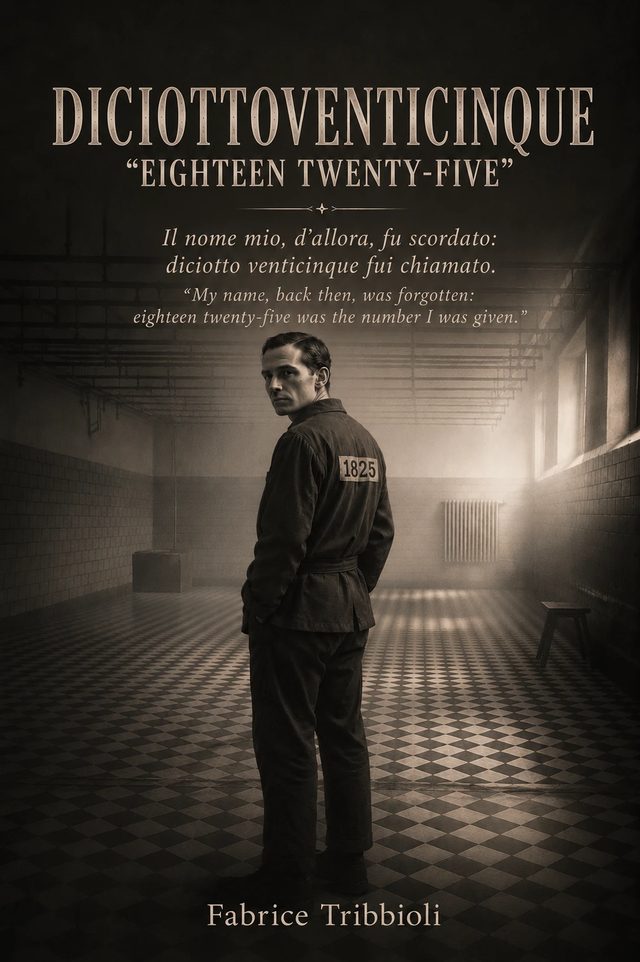
A man reduced to a number. A grandson who gives him back his voice.
September 1943: Warrant Officer Bruno Tribbioli is captured by the Germans and deported to Germany as an Italian Military Internee. They take away his name and call him 1825. In order not to die before his time, he writes a poem of more than one hundred and thirty stanzas in the camp. Eighty years later, that notebook resurfaces from a tin box.
A book that moves and makes you think, and pays tribute to the roughly 600,000 Italian Military Internees, protagonists of one of the lesser-known chapters of the Second World War.
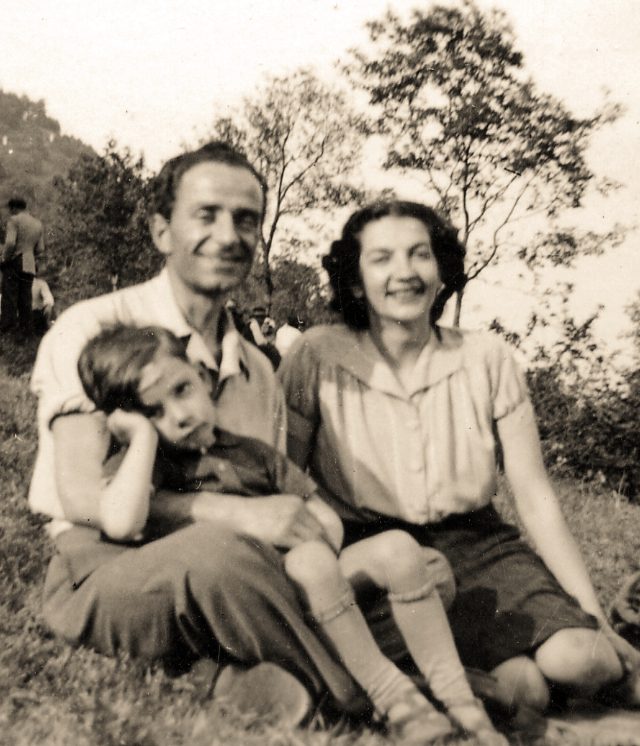
Bruno, Agnese and little Giorgio.
Bruno Tribbioli was born in Cortona in 1907 and grew up motherless in an orphanage, where he learned music and poetry. He became an infantry warrant officer, married Agnese in Tenda, and had a son, Giorgio.
On 8 September 1943 the trap closes. At Cuneo station, as Agnese puts a basket of peaches in his hands, a German officer points a revolver at her chest. It is the last image of home.
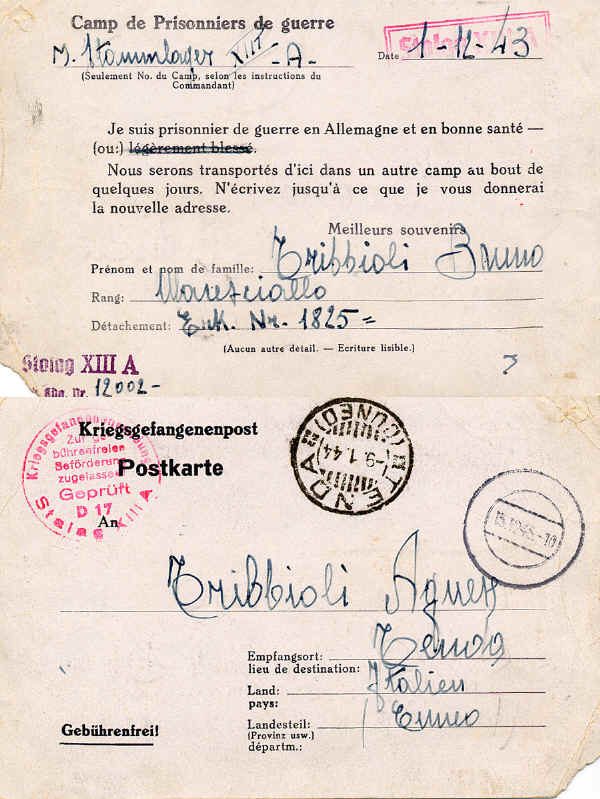
In Germany Bruno loses his name and becomes a number. They offer to let him out of the fence if he enlists with the Germans: he says no, and chooses to remain a prisoner.
Buy on Amazon →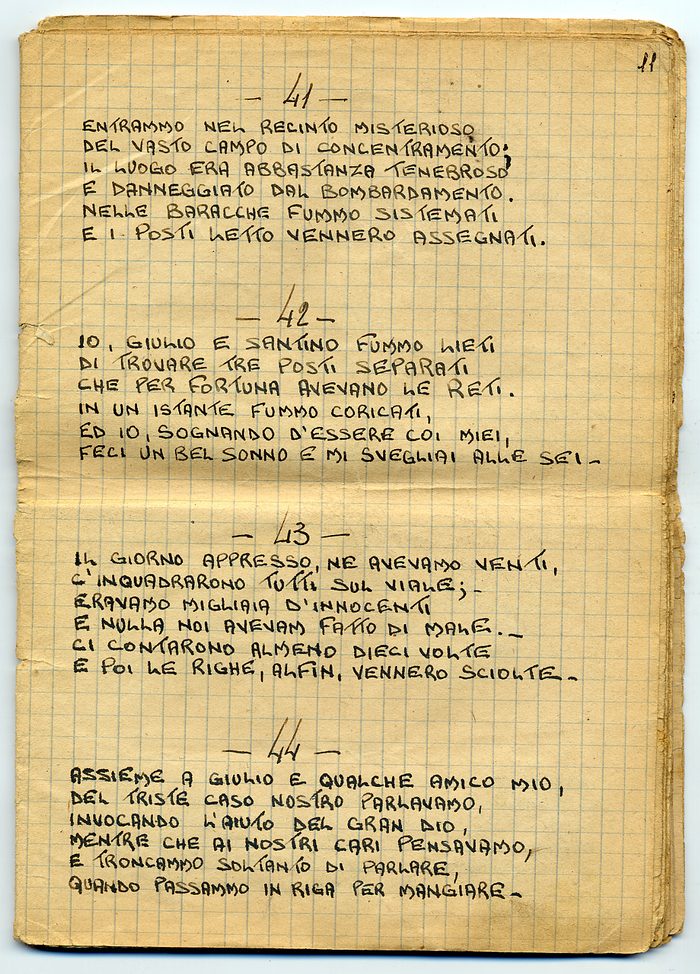
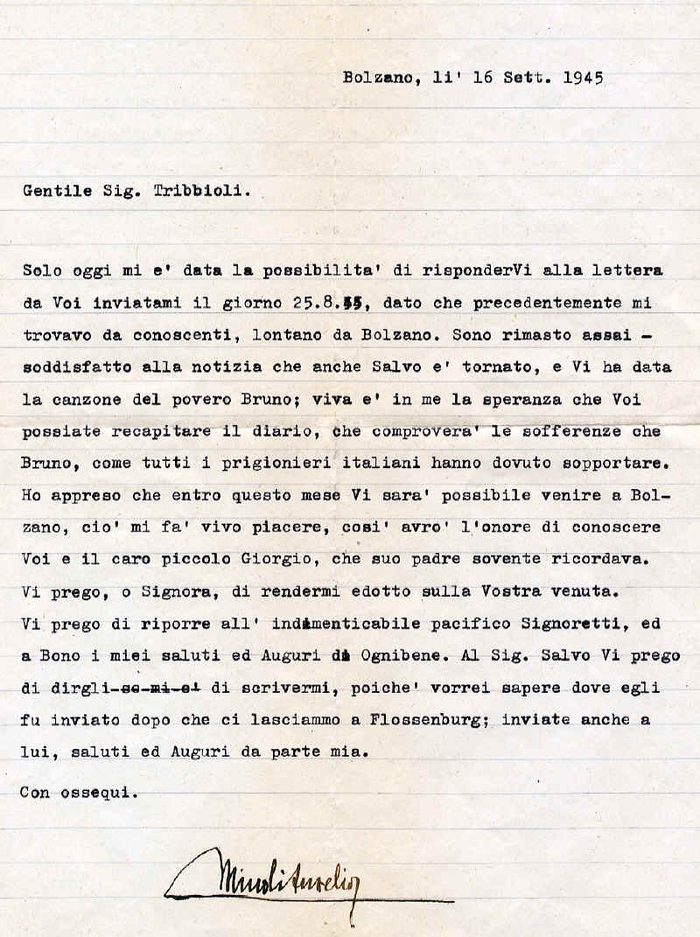
“Bruno had written in verse. Inside the camp, his fingers swollen with cold, he had counted syllables and hunted for rhymes through a hundred and fifty stanzas. He was not trying to write poetry. He was trying not to die before his time.” From the first chapter · “The peaches”Read the first chapter for free
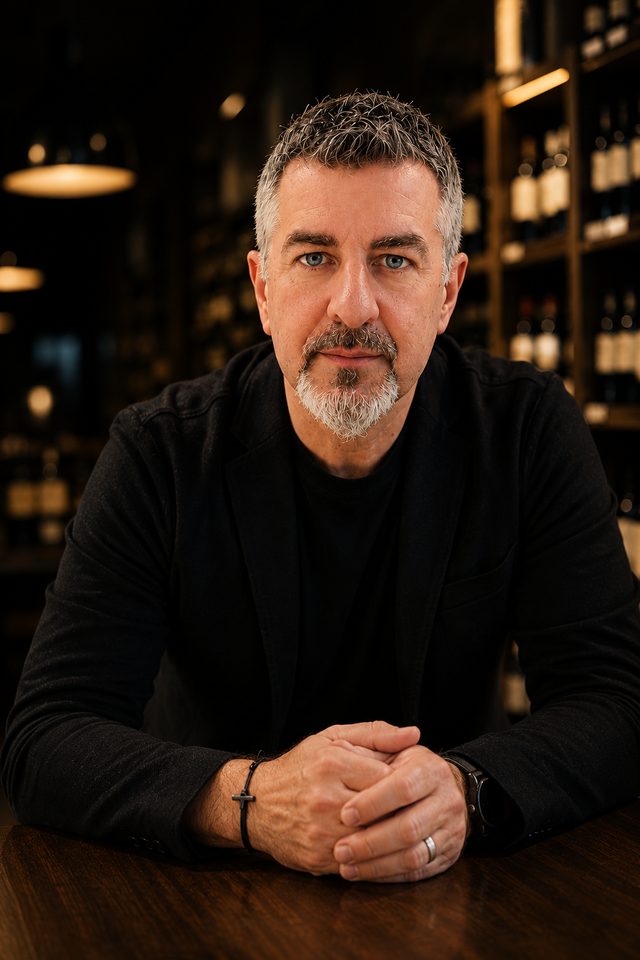
Fabrice Tribbioli, Bruno's grandson.
Born in Nice to an Italian father and a French mother, raised in Turin. His father is Giorgio, the little boy Agnese held in her arms at Cuneo station.
After a career in retail and several books on selling, with DICIOTTOVENTICINQUE he faces his own family's history: he opened the tin box, deciphered the notebook and searched the archives, in order to finally introduce a father to his son.
“This book is that kiss. Bruno entrusted it to his words; his words crossed Germany, eighty years and three generations, and now arrive where they were always meant to arrive.”
The author's website Instagram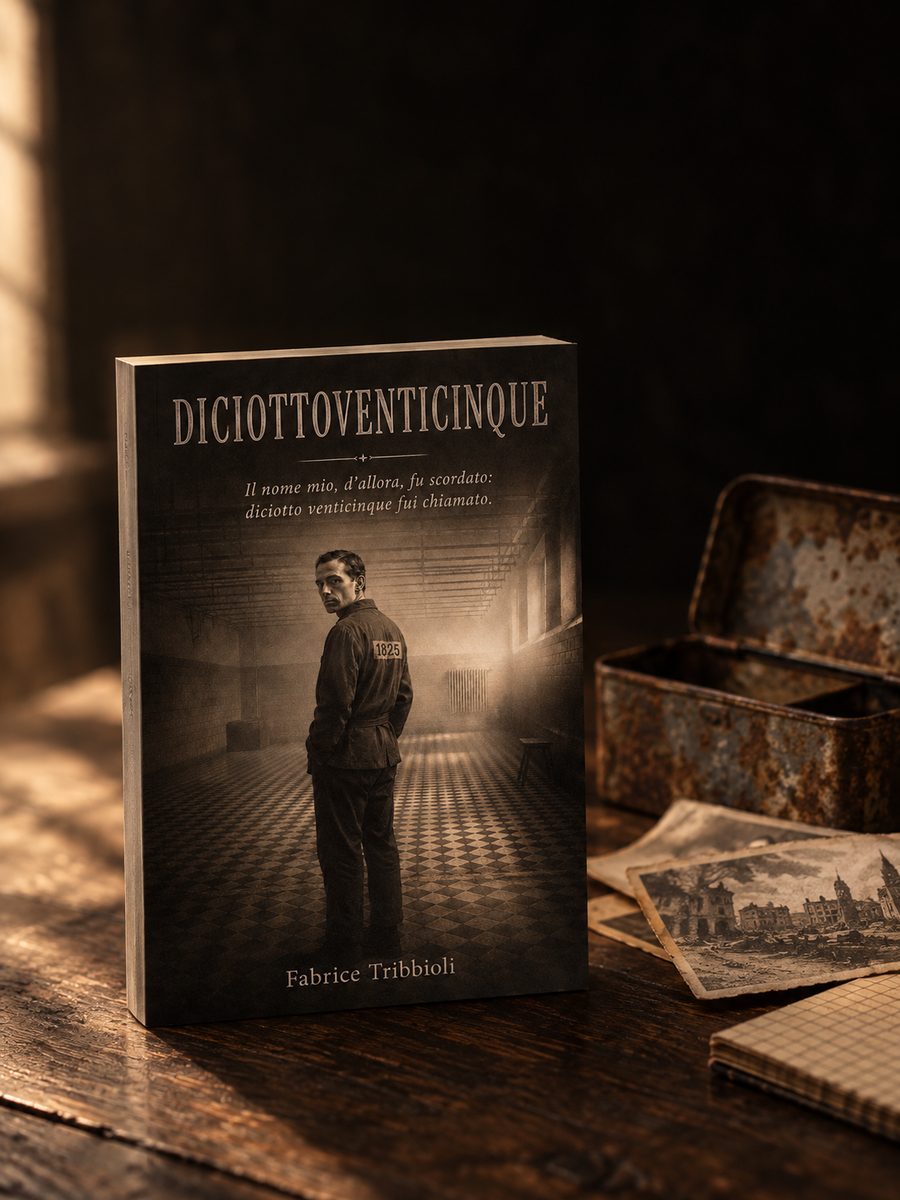
Take Bruno's story home.
DICIOTTOVENTICINQUE is on sale as a paperback on Amazon, with family photographs and the handwritten pages of the diary.
Only on Amazon · paperback editionBring Bruno's story to your school, your town or your association.
The author, Bruno's grandson, presents the book in person with the original documents: the notebook, the postcards from the camp, the 1945 letter.
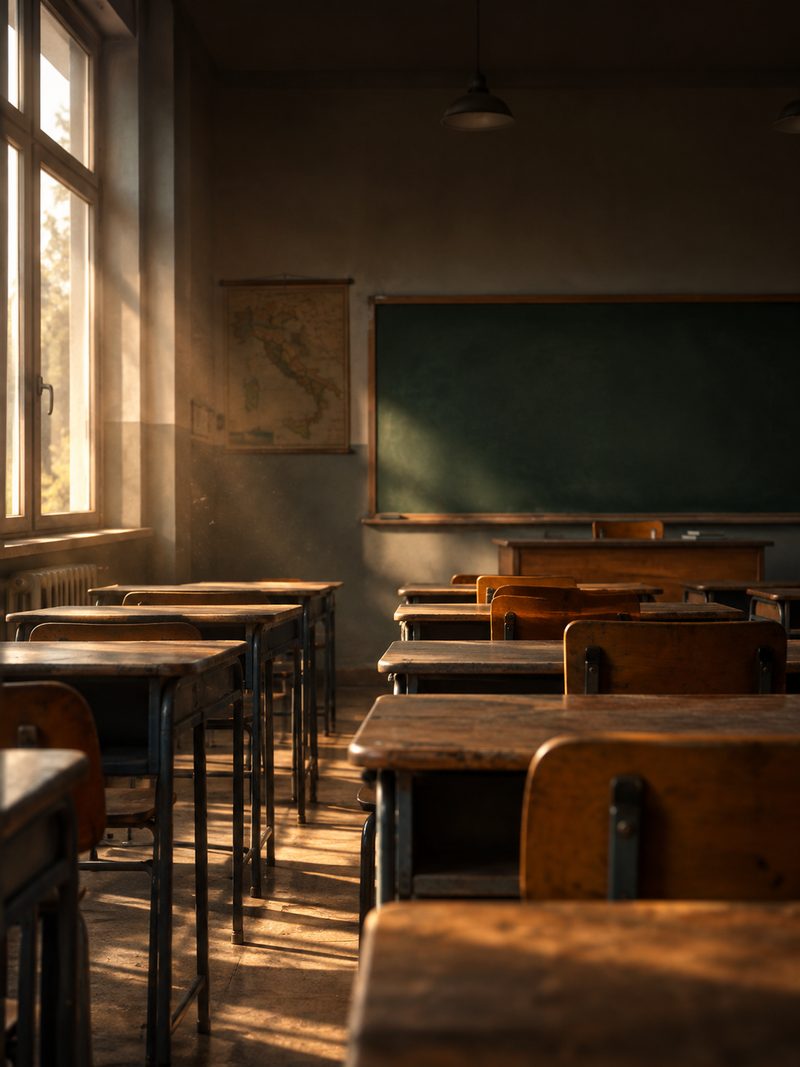
Schools
A meeting with students to make history through a real person, with the documents in hand. Middle and high school.
Request a presentation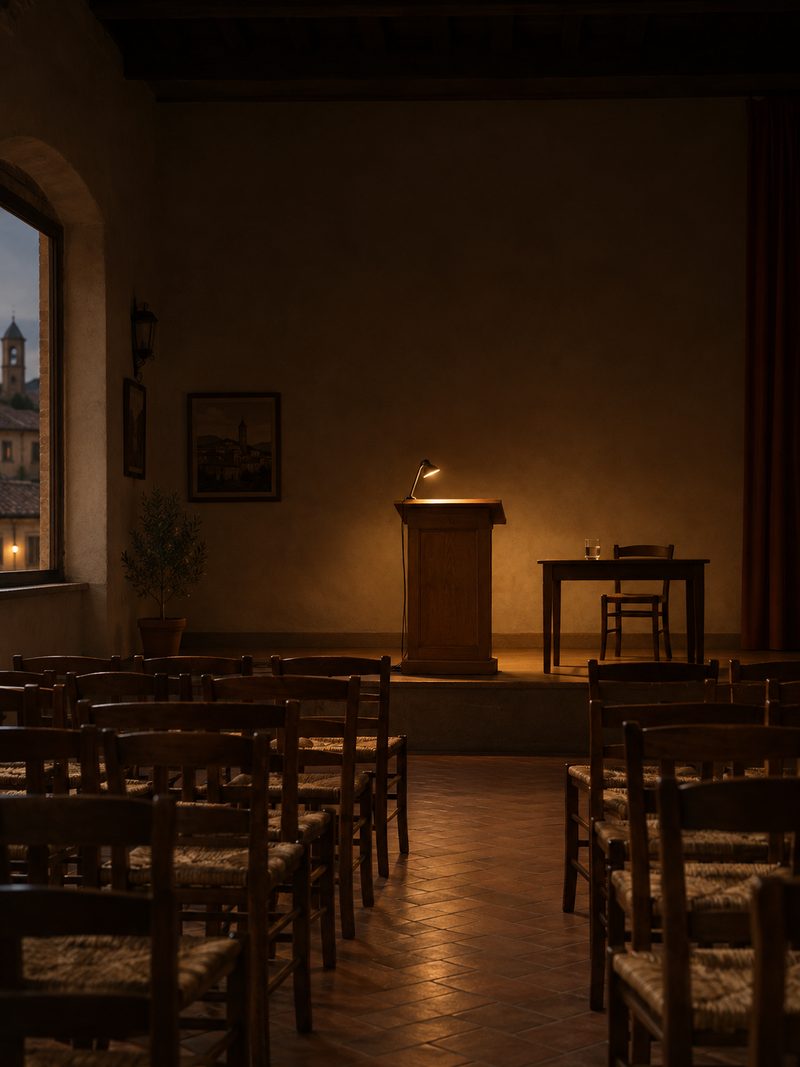
Towns and libraries
An evening open to the public, for Remembrance Day or your town's cultural events.
Request a presentation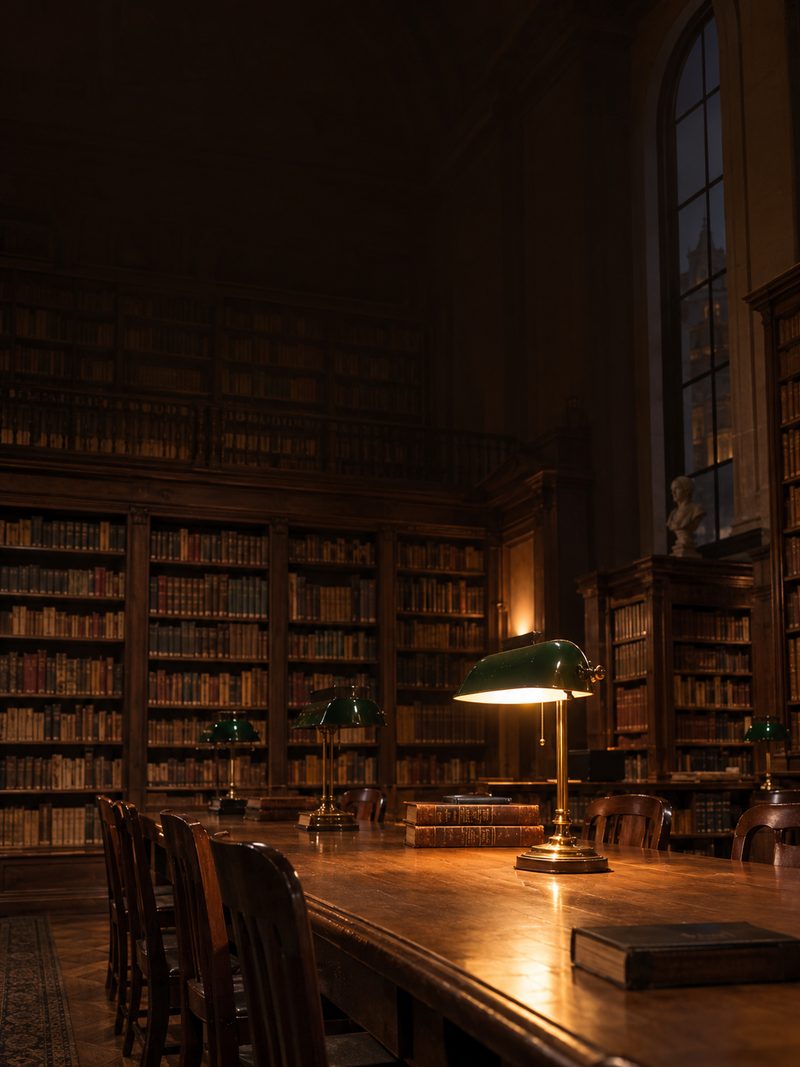
Associations
Memory associations, clubs and reading groups: the meeting adapts to the audience and the place.
Request a presentationPress and blogs
For reviews, interviews and articles: a copy of the book, the full synopsis and high-resolution family photographs.
Request a copy- Write to usFill in the form with the organisation, city and period you have in mind.
- We plan it togetherFormat, length and audience are agreed according to your needs.
- The meetingThe author brings the story, the original documents and copies of the book.
Write to us.
To request a presentation, a press copy or any information about the book.
Or write to info@diciottoventicinque.com